About
The Trigtare® was born of research in pure and applied mathematics by Professor Claude Gauthier at the Université de Moncton. This instrument was conceived, tested and refined over more than twenty-five years. That academic origin is a rare foundation of credibility in the world of musical instruments: Trigtare is not a curiosity, it is the fruit of patient and rigorous research.
Milestones in the research
The path travelled can be read in the prototypes themselves. Here are a few milestones from that research.
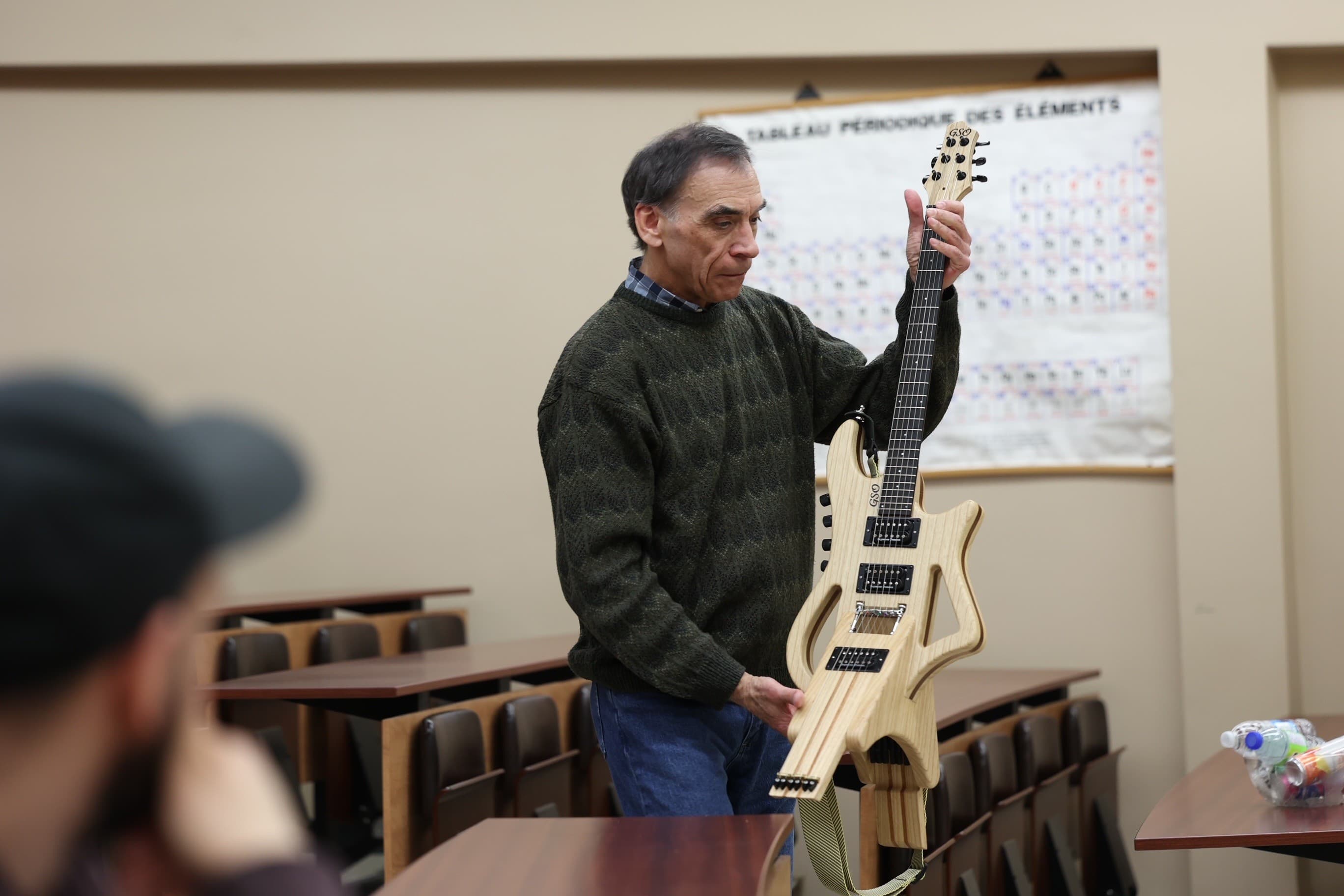
Professor Claude Gauthier presents one of the research prototypes that preceded the Trigtare. 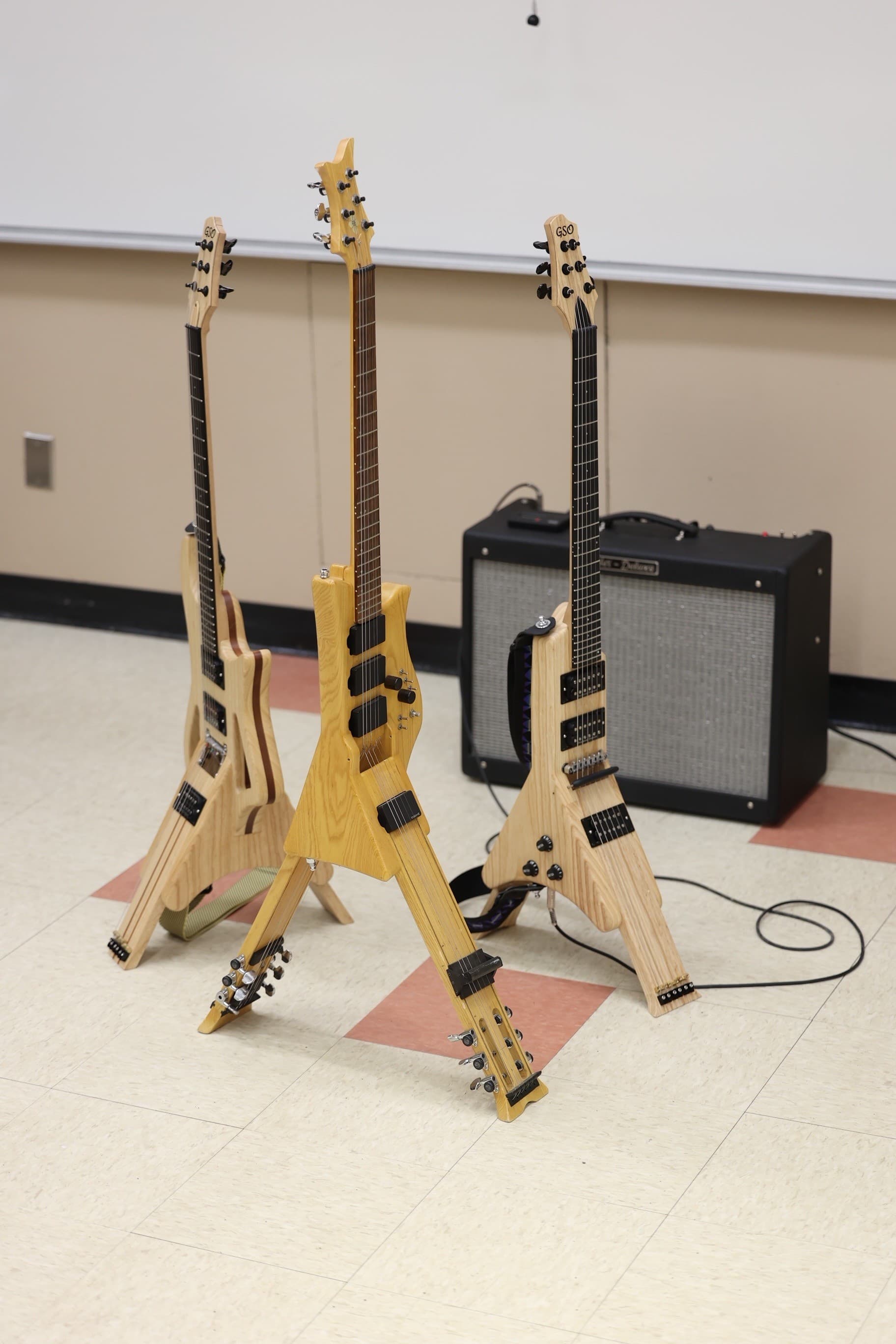
Three prototypes explored over more than twenty-five years of research at the Université de Moncton. 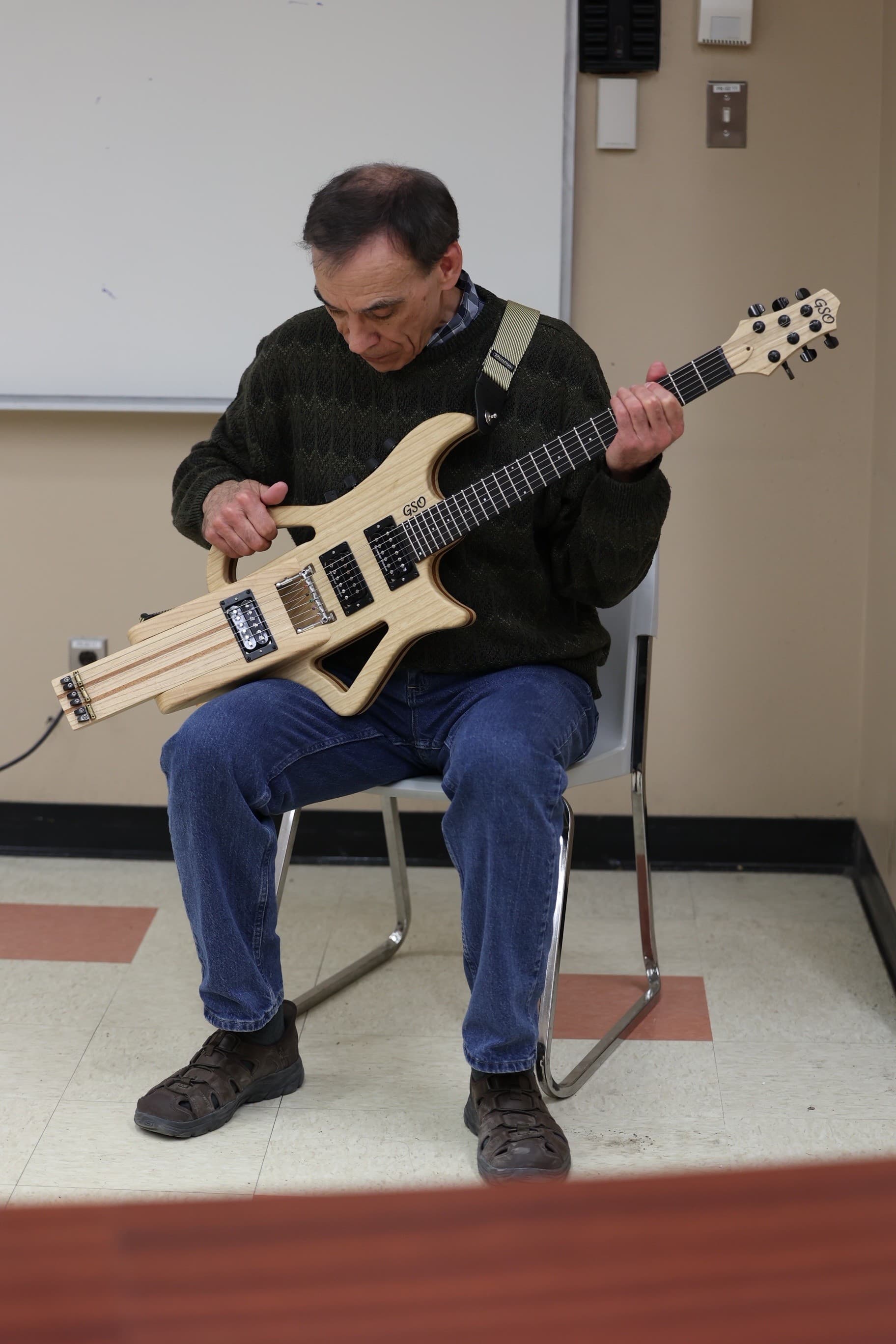
Professor Claude Gauthier with one of the earlier prototypes.
These three photos show research prototypes that predate the commercial model: they do not yet show the Trickeur, the lever mechanism of the latest generation. They document the path travelled, not the instrument as it is delivered today.
From Tritare to Trigtare: an innovation, not just a name
The instrument was originally called “Tritare”, after its inverted-Y string networks. The Trigtare was born thanks to the Trickeur, a lever-operated mechanism that makes it possible to switch from guitar mode to Tritare mode.
That capability is reflected in the name of the instrument. The “G” in Trigtare recalls the guitar: Trigtare is therefore the inverted-Y networks and the guitar brought together in a single instrument. One more nod hides inside the name. In English, “trig” evokes the word “trigger”: that is precisely where the name of the mechanism comes from — the Trickeur, which switches the instrument from one mode to the other.
Craftsmanship
Guillaume Saint-Onge, luthier and musician
Every Trigtare is built by Guillaume Saint-Onge, an artisan luthier from the Montréal area. A guitarist himself, he brings a double perspective, technical and musical, to every instrument he shapes, and personally tests each unit before it reaches its owner.
Commercialization
Innovations Beaubec Inc.
Innovations Beaubec Inc., based in Dieppe, New Brunswick, handles the commercialization of the Trigtare. The company leads the strategy, the customer relationship and direct sales, in close collaboration with the luthier and the research team behind the instrument.